WASHINGTON, July 4 (Xinhua) -- Swiss scientists found that planting trees is the world's most effective solution to climate change, with a potential to capture two thirds of human-caused carbon emissions.
The study published on Thursday in the journal Science showed that the world's forest land can be increased by a third without affecting existing cities or agriculture.
The study led by researchers from ETH Zurich is the first of its kind to quantify how many trees the Earth can support, where they could exist and how much carbon they could store.
The forests could be regrown on 1.7 to 1.8 billion hectares of land in areas that are not currently used as urban or agricultural land, adding 0.9 billion hectares of tree canopy cover, according to the study.
Globally, there are a total of 5.5 billion hectares of forest and 2.8 billion hectares of tree canopy cover, according to the UN Food and Agriculture Organization.
Those new forests, once mature, could store 205 billion tons of carbon, about two thirds of the 300 billion tons of extra carbon that exists in atmosphere as a result of human activity since the Industrial Revolution, according to the study.
Also, if cropland and urban areas were included, the forests could be regrown on an additional 1.4 billion hectares of land, adding 0.7 billion hectares of tree canopy cover, according to the study.
"Our study shows clearly that forest restoration is the best climate change solution available today and it provides hard evidence to justify investment," said ETH professor Tom Crowther, senior author of the study.
"If we act now, this could cut carbon dioxide in the atmosphere by up to 25 percent, to levels last seen almost a century ago," said Crowther.
The study found that more than half of the tree restoration potential went to six countries: Russia (151 million hectares), the United States (103 million), Canada (78 million), Australia (58 million), Brazil (50 million) and China (40 million).
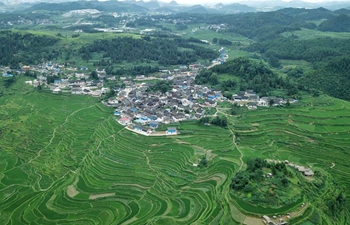
Data released from the U.S. space agency NASA have shown that China led the way in greening on land, thanks to its ambitious tree-planting program and intensive agriculture.
At least 25 percent of the foliage expansion since the early 2000s globally came in China, according to a study published in February in the journal Nature Sustainability.