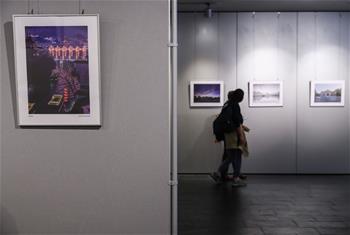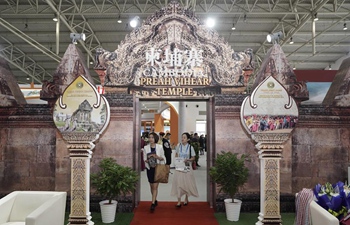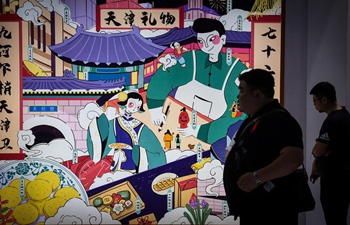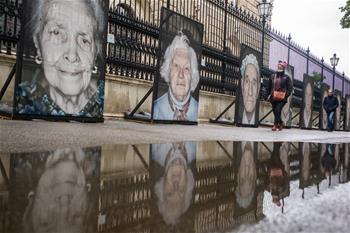
TOKYO, May 18 (Xinhua) -- Cultural exchanges and integration between Japan and China have been developing like flow of a great river, and museums and art galleries are the carriers of Japanese and Chinese culture, said Motoaki Kono, curator of Seikado Bunko Art Museum, as Saturday remarked the International Museum Day.
Located on the outskirts of Tokyo, the Seikado Bunko Art Museum was founded by Yanosuke Iwasaki, who began collecting ancient Chinese and Japanese books at around 1892. In 1907, the Seikado Bunko Library was established with a collection of precious ancient books, and the name "Seikado" stemmed from The Book of Songs, an ancient Chinese collection of poems.
Currently the Seikado Bunko Art Museum contains 6,500 works of art, and about 200,000 books, including 80,000 Japanese volumes and 120,000 Chinese volumes.
Kono, who is an expert on the history of Japanese art, said in an exclusive interview with Xinhua that in the formation process of modern Japan, museums and art galleries were set up in a large scale in order to raise national awareness.
In modern society, museums and art galleries are playing an increasingly important role, and their emphasis is also changing, Kono said.
This year's International Museum Day is themed "Museums as Cultural Hubs: The Future of Tradition".
As the theme indicates, while fulfilling the original tasks of collection, conservation, communication, research and exhibition, museum is gradually gaining new functions.
"Museums and galleries in Japan were originally state institutions, but now elements of the state are shrinking. They have become more human, more individualized, more nationalized and go more deeply into people's heart," Kono said.
"Although the buildings of museums and art galleries are the same, the meaning they represent has changed a lot in modern society," he said.
The cultural exchanges between China and Japan date back to the ancient history. For example, the Japanese learned Chinese characters from which they developed Hiragana, a form of Japanese syllabary, while key words in important Japanese historical documents are written in Chinese characters.
"Although there have been twists and turns in the political development of Japan-China relations, the cultural exchanges between the two countries have been running like a river straight ahead since ancient times," Kono said, adding that he and the founder of the museum both hold great respect for Chinese culture.
The museum held exhibitions of precious Chinese paintings from the Ming and Qing Dynasties last year, as well as exhibitions of paintings from the Song and Yuan Dynasties, Kono said.
The museum is currently exhibiting Chinese tea bowls called Yohen Tenmoku, which were made in the Southern Song Dynasty and brought to Japan. The bowls are famous for their charm of naturally formed flare, which is like a cosmic star.
"We want to share all this wonderful Chinese culture with more ordinary people, who can see displays of traditional Chinese culture here," Kono said. "It can be said that museums and art galleries are the carriers of Japanese and Chinese culture," he said.