HONG KONG, April 12 (Xinhua) -- International Monetary Fund (IMF) Managing Director Christine Lagarde said earlier in Hong Kong that import restrictions hurt everyone and governments need to steer clear of protectionism in all its forms.
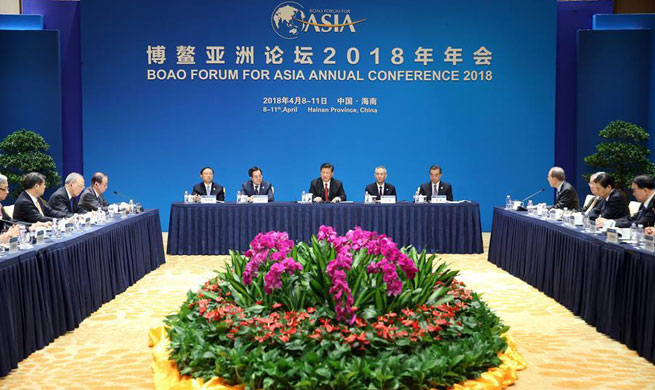
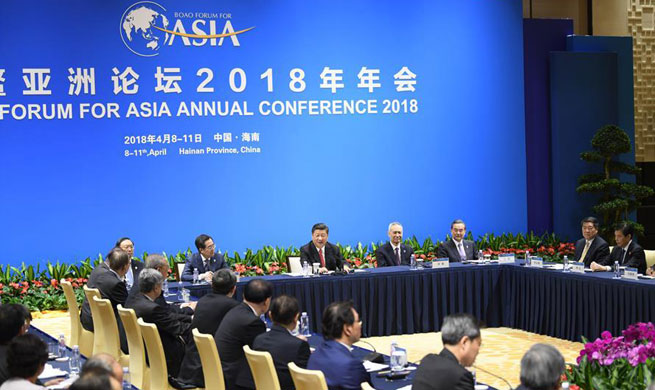
Lagarde gave her speech at the Asia Global Institute of the University of Hong Kong on Wednesday after attending the Boao Forum for Asia in China's southern island province of Hainan.
Lagarde said that IMF, which earlier projected 3.9 percent global growth for 2018 and 2019, continues to be optimistic, but the momentum will eventually slow.
Amid the challenging outlook, she mentioned three priorities for the global economy, among which steering clear of protectionism is the first of all.
Not only do import restrictions lead to more expensive products and more limited choices, but they also prevent trade from playing its essential role in boosting productivity and spreading new technologies, she said, adding that even protected industries eventually suffer as they become less dynamic than their foreign competitors.
Lagarde admitted that there are unfair trade practices, which must be eliminated, while the best way to address these macroeconomic imbalances is not to impose tariffs, but to use policies that affect the economy as a whole, such as fiscal tools or structural reforms.
Guarding against fiscal and financial risk is another priority for global economy, Lagarde said, according to the IMF analysis, after a decade of easy financial conditions, global debt, both public and private, has reached an all-time high of 164 trillion U.S. dollars.
She said that high debt burdens have left governments, companies, and households more vulnerable to a sudden tightening of financial conditions. This potential shift could prompt market corrections, debt sustainability concerns, and capital flow reversals in emerging markets.
"We must use the current window of opportunity to prepare for the challenges ahead," which, she said is about building policy buffers, i.e. creating more room to act when the next downturn inevitably comes.
For many economies, it means reducing government deficits, strengthening fiscal frameworks, and placing public debt on a gradual downward path. This should be done in a growth-friendly way through more efficient spending and progressive taxation.
It also calls for more exchange rate flexibility to cope with volatile capital flows, especially in emerging and developing countries, she added.
Fostering long-term growth that benefits everyone is also important, Lagarde said, noting that fostering stronger and more inclusive growth is a key challenge, and countries need to step up economic reforms and policy actions to boost productivity and potential growth.