Xinhua Commentary: Unilateral U.S. practices erode foundations of global prosperity

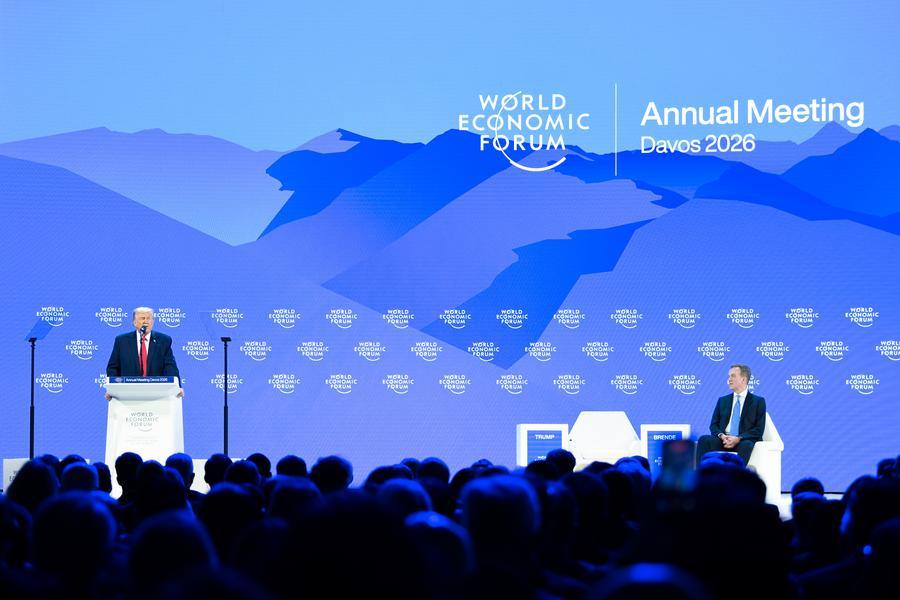
U.S. protectionism and unilateral actions disrupt global trade, create economic uncertainty, and threaten stability, while lasting prosperity depends on open markets, multilateralism, and cooperative international policies.
DAVOS, Switzerland, Jan. 22 (Xinhua) -- At the 2026 World Economic Forum in Davos, the United States once again peddled the convenient myth that "when America booms, the entire world booms."
This claim rests on a flawed assumption: that U.S. economic expansion automatically translates into global growth. In reality, recent experience suggests the opposite. When one country's growth is pursued through protectionism, coercive trade measures and unilateral pressure, the spillover effect for the rest of the world is not shared prosperity but heightened uncertainty and mounting risk.
Whether U.S. growth benefits the world depends on choices -- openness or exclusion, cooperation or coercion, respect for international rules or unilateral action.
The United States has increasingly resorted to tariffs as a primary economic instrument and a convenient coercive tool. Such measures are often imposed abruptly and abused frequently, as a trade war weapon, bringing uncertainty and volatility to the global economy and undermining the predictability on which international trade depends.
The repercussions are worldwide. Higher trade barriers weaken growth prospects not only for trading partners, but for the world economy as a whole. Supply chains are disrupted, cost rises spill over borders, and investment decisions are delayed or scaled back. Smaller and more vulnerable economies bear a disproportionate share of the burden, while global inflationary pressures are amplified.
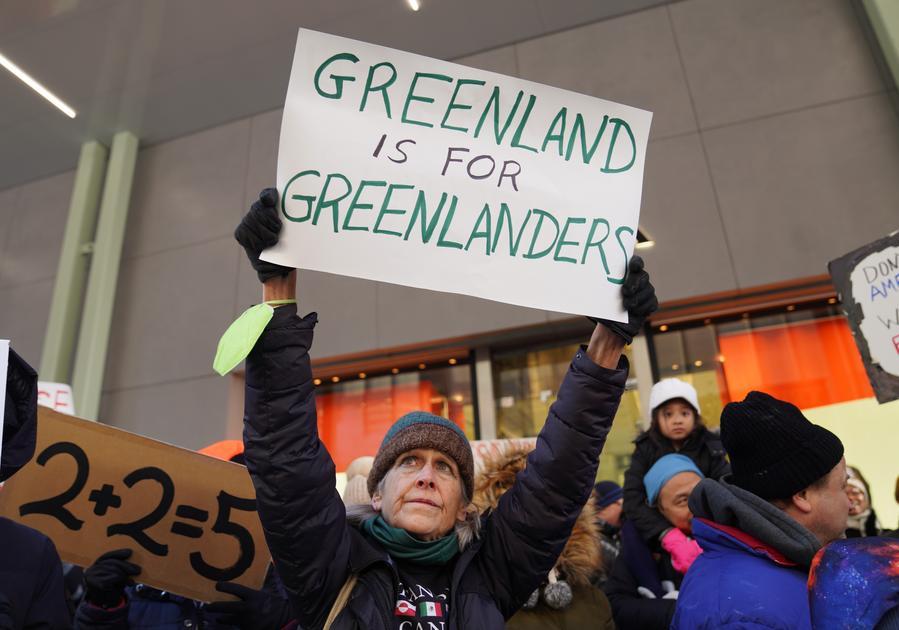
Beyond trade, U.S. unilateral behavior has further jeopardized international stability. Recent U.S. military incursion into Venezuela, threat of force against Iran and the ambition to snatch Greenland have heightened geopolitical tensions and raised concerns about the erosion of international norms. Such approaches prioritize unilateral advantages over multilateral benefits, injecting uncertainty in the already fragile global economy.
Economic development cannot thrive amid instability. Markets need confidence, as growth depends on a predictable international environment. When the world's largest economy prefers pressure tactics, people see more fragmentation and mistrust rather than security and efficiency.
In a world already upset by rising protectionism, the path to durable prosperity still runs through open markets, multilateralism and win-win cooperation. Free trade remains the most feasible way to common development and shared prosperity.■











Comments